Jul 17 2009
Upgrading a netbook EFI install of Mac OS to 10.5.7
I wrote this answer in response to an email, and thought it would probably be better to share it with everyone 😉
Thinking different(ly)?
Jul 17 2009
I wrote this answer in response to an email, and thought it would probably be better to share it with everyone 😉
Feb 26 2009
The two current solutions are to remove ‘GrowlMail.bundle‘ from “~/Library/Mail/Bundles” (or wherever it is installed), or to execute the command:
defaults write com.apple.mail GMSummaryMode -int 2
… to disable the Detailed Summary mode, which misinteracts with the Safari 4 version of WebKit.
Jan 29 2009
There is currently a great demand for laptops which provide the user-friendliness of a Mac without the cost and weight of a MacBook or MacBook Pro, or without the cost of size of a MacBook Air.
Given that the ever-increasing varieties of Intel Atom-based netbooks are low-cost and roughly equivalent in hardware terms to the original MacBook Air, they make a tempting target to conversions to “MacBook Mini”s.
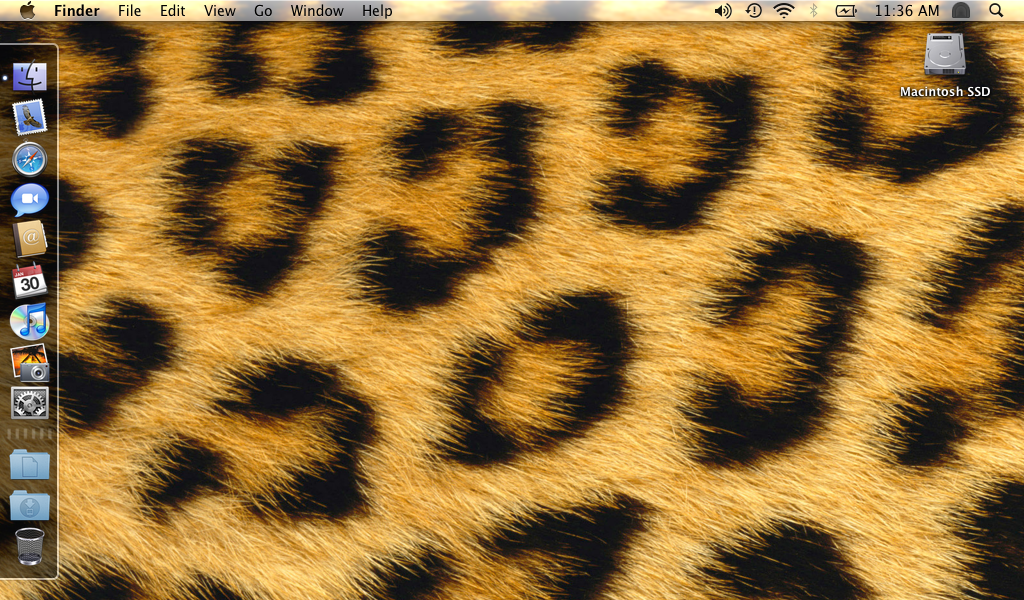
Indeed, there are a large (and also increasing) number of guides which will tell you how to get OS X running using a variety of ISO images downloaded via BitTorrent and hacked kernels which then require extensive changes to the installed system and come with copious warnings not to upgrade the OS when Software Updater prompts you to… and even then it’s common for basic functions such as sleep or USB not to work (although it has to be said that no method is entirely free from caveats).
This guide doesn’t work like that. This guide will describe how to install OS X from an original Leopard installation DVD and how to end up with an entirely unmodified system (*) which will not break when Apple issues updates.
Dec 16 2008
Well, good news and bad here…
The good news is that, with the DSDT fix (although in all honesty I’ve not tried without) the 10.5.6 upgrade does the right thing and reboots correctly. Even better, a modified SystemConfiguration is no longer needed in /System/Library. May be due to this, the screen is also no longer stuck at full brightness… although due to the following issue, I don’t know whether it can be modified.
Dec 9 2008
If running Mac OS on a non-Apple laptop, then there’s a sting in the tail of the forthcoming 10.5.6 update: it appears that the new kernel only wants to run with ACPI HPETs, and will fail on boot if legacy i8254/RTC timers have interrupts assigned to them.
To fix this, a replacement ACPI Differentiated System Description Table is required. efi_boot, version 6.1 or above, has the ability to replace the DSDT supplied to the kernel from the system firmware with a customised one: Simply place the alternative DSDT.aml in the root of the EFI volume – generally /Volumes/EFI/.
Nov 15 2008
Initially I ordered a Dell Inspiron 910/Mini 9, after reading about how easy it was to get Leopard running on these machines. However, after initially quoting 15 days delivery then then, on the 15th day, extended this to 30 days – at which point I cancelled the order.
Instead, due to its looks and frankly astonishing battery life, I ordered a Samsung NC10.
As it turns out, although all Atom netbooks are created equal, some are more equal than others – especially where OS X compatibility is concerned…
Oct 12 2008
I don’t have to most successfully history of predicting what Apple might do next – but then, who does?
There’s an interesting discussion on MacRumors about newly-leaked photos (allegedly) showing more details of the machines which will be announced this Tuesday.
Jul 22 2008
WordPress 1.0 for the iPhone has been released, and I’m using it to write this post. It’s been a little time coming, but it looks pretty fully-featured.
Sep 25 2009
Fix for perpetually empty “Open Recent…” items in Xcode 3.2 on Snow Leopard
It’s been bugging me for a while now that – ever since upgrading to Xcode 3.2 and Mac OS 10.6 – the list of recent projects in Xcode’s initial window and in its “Open Recent File” and “Open Recent Project” menus are all blank.
More
By Stuart • Apple 4